
|
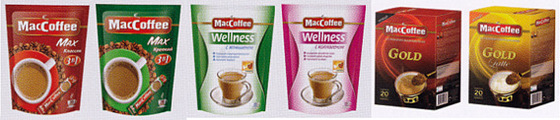
Food Empire’s shares fell 10% to S$1.89 on 21 Sept, following a morning report from CGS International on the implications of Russia’s intervention in Nestlé’s local business.
|
| The Nestlé trigger |
Russia has placed Nestlé’s Russian assets under temporary external administration, alongside businesses including French retailer Auchan, according to a Reuters report headlined "Russia says Nestle, Auchan asset seizures are payback for hostile actions by Europe".
Earlier interventions affected Danone and Carlsberg in 2023.
Such arrangements can remove a foreign owner’s management control without immediately transferring legal ownership.
Nestlé’s case apparently had some company-specific circumstances.
Reuters reported in August, citing Kommersant, that a Russian company had petitioned for temporary administration of Nestlé’s assets.
The reported rationale included Nestlé’s decision not to expand Russian production and to halt exports from its Russian factories.
| Why Singapore’s position matters |
There are reasons not to treat every foreign company as equally exposed.
Singapore’s March 2022 sanctions targeted military and specified dual-use goods, designated banks and entities, and financing benefiting the Russian government.
The EU’s economic restrictions are broader, while the EU and its member states also supply weapons and train Ukrainian troops.
|
Stock price |
$1.89 |
|
52-week range |
$1.80-$2.86 |
|
Market cap |
S$1.2 b |
|
52-week change |
-5.6% |
|
PE (ttm) |
15.8 |
|
Dividend yield |
2.8% |
|
P/B |
2.9 |
|
Source: Yahoo! |
|
Switzerland has frozen substantial Russian assets as part of sanctions, and there have been political initiatives to use them to benefit Ukraine.
Singapore was also placed on Russia’s “unfriendly countries” list in March 2022.
CGS highlights Singapore’s lack of direct military involvement and continuing diplomacy as factors that reduce Food Empire’s risk.
In June 2026, Prime Minister Lawrence Wong met President Vladimir Putin at Russia’s request.
According to Singapore’s foreign ministry, Wong emphasised that Singapore’s position on Ukraine reflected sovereignty and territorial integrity, rather than alignment with either side.
| Food Empire: Business as usual |
In its 21 Sept announcement, Food Empire highlighted more than 30 years of operations in Russia and local manufacturing since 2006.
It said it continues to invest in marketing initiatives and its brands there, and said it would monitor developments and make further announcements when appropriate.
| A counter-example |
|
The Italian heating-equipment group Ariston provides a different outcome. Its Russian subsidiary was placed under external administration in April 2024, with control assigned to a Gazprom-related business. A decree on 26 March 2025 returned control to Ariston. The Financial Times reported that intensive Italian diplomatic engagement had accompanied efforts to secure the reversal. |
Food Empire’s exposure is significant: Russia contributed 32.7% of group revenue and 33.3% of net profit in 1H2026.
While Food Empire has established local distribution networks and customer relationships, it has substantial coffee-processing and ingredients capacity outside Russia, including operations in India and Malaysia.
These overseas facilities would not automatically fall under an intervention confined to Russian assets.
On the flip side, will disruption to a rival like Nestle create opportunities for the other players in Russia?
CGS points out that Food Empire could gain market share if the change in control disrupts Nestlé’s supplies.
|
 → See also:Food Empire: Can a US$476 M Business Grow to US$1 Billion?


